Manal Anis
Manal Anis
Climate-adaptive shading, daylight, optimization, shape-memory alloy, Nitinol
Advisor: Dr. Yun Kyu Yi
Manal Anis, LEED AP BD+C, is a PhD candidate in Architecture in the Technology and Environment track. She received her M.S. in Architecture from Pennsylvania State University and her B.Arch from BUET, Bangladesh. She previously worked as a Designer at WRNS Studio, CA, and as a Student Fellow at Gensler, where she worked on identifying the Key Performance Indicators (KPIs) impacting the future of Professional Services design in a post-COVID world. Manal is currently developing a climate-adaptive shading system using shape-memory alloy and optimizing its performance using Machine Learning. Her work bridges architecture, materiality, and computation, and has been awarded the Robert F Mast Fellowship and the William Henry Meyer Scholarship.
Credit: Joe Mazza/Brave Lux
Susan Ask
Susan Ask
Climate consequences of decisions about landscapes and land use
Advisor: Dr. Brian Deal
Susan Ask is a first-year doctoral student in Landscape Architecture. She is interested in how the decisions we make about landscapes can affect—and are affected by—climate change. Her work has always focused on sustainability; she founded a sustainability-focused non-profit that combines science education with community engagement. Previously, Susan worked as a university extension agent in Chicago, a conservation land manager in Maine, and a field ecologist in other infinitely fascinating places.
She received an M.E.S. in Ecosystem Science and Management from Yale University and a B.A. in Environmental Studies from the University of Kansas. Read more about Susan.
Credit: Joe Mazza/Brave Lux
Shreyonti Chakraborty
Shreyonti Chakraborty
Crowding, family functioning, space scarcity
Advisor: Dr. Bill Sullivan
Shreyonti Chakraborty is an architect and aspiring researcher from India. After graduating with a B.Arch. from Jadavpur University and an MS from Penn State University, she spent some time working for architecture firms in New England. Eventually, she chose to return to research with a focus on the effects of urban living conditions on the psychological and relational well-being of human beings. Currently, she is most interested in the effects of crowding on social interactions. She is also pursuing a minor at the HDFS department.
Soumya Dasgupta
Soumya Dasgupta
Neoliberal Developmentalism, Digital Technocracy, Global South, South Asia
Dissertation: Design Empire: Transformations of Architectural Productions in Urban India after 1991.
Advisor: Dr. D. Fairchild Ruggles
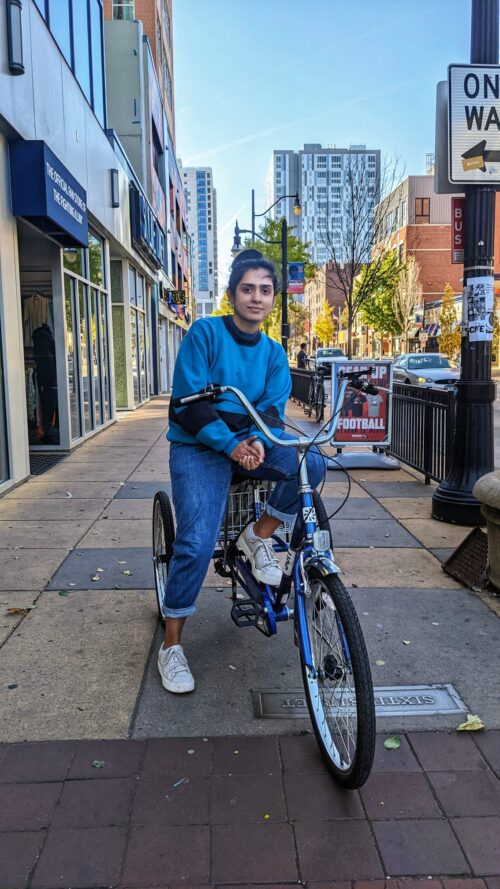
Soumya (Shoumo) is a Ph.D. Candidate in Architecture (History and Theory). He has a Master’s in Urban Design from the School of Planning and Architecture, New Delhi, and a B.Arch. from the Indian Institute of Engineering Science and Technology, Shibpur, Kolkata, India. His scholarly interests include neoliberal developmentalism, digital technocracy, Global South, and South Asia. His Ph.D. dissertation broadly explores the contested systems of architectural productions in 21st- century urban India. He has presented his research at academic conferences, including the SAH,
ACSA, and IASTE, as well as Ph.D. conferences at Georgia Tech, AA London, and UCLA. Soumya is an awardee of the Humanities Research Institute Graduate Fellowship for 2023-24 and a former recipient of the Illinois Distinguished Fellowship. He also received the Nicholson Fellowship to attend the School of Criticism and Theory Summer Program, Cornell University. Soumya loves teaching and has worked as a Graduate Teaching Assistant for graduate-level history, theory, and design courses in Architecture.
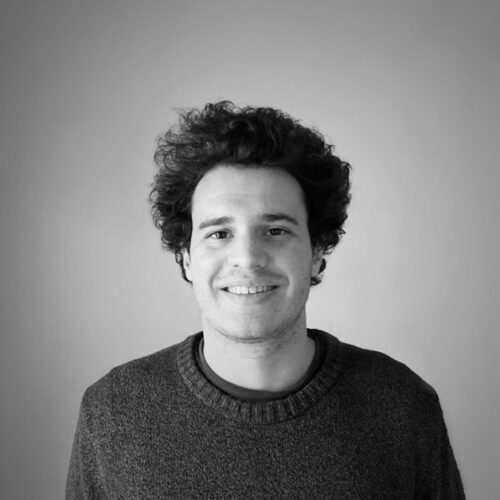
Stephen Ferroni
Stephen Ferroni
Urbanism, Urban regeneration, History of architecture
Advisor: Dr. Kathryn Holliday
Keun Jang
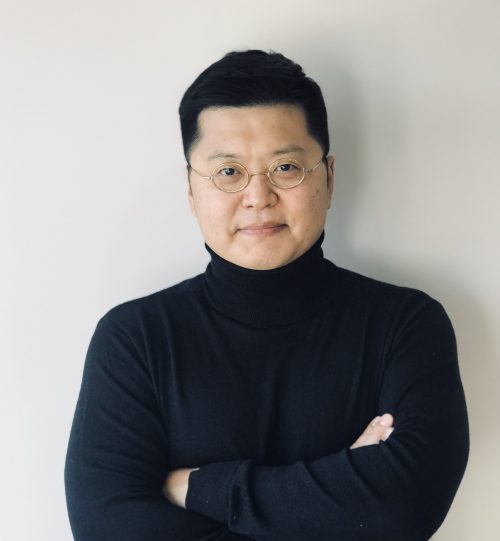
KeunH Jang
Building Energy Performance Simulation, Architectural Design Automation, 2D Image Retrieval, Automated Design Evaluation
Advisor: Dr. Yun Kyu Yi
KeunH Jang is a PhD Candidate in Architecture Technology at the University of Illinois Urbana- Champaign, specializing in developing 2D image retrieval systems that convert sketches into 3D CAD models for architectural design and energy simulations. He holds a Master of Architecture from the University of Pennsylvania and a Bachelor of Science in Agricultural Engineering
from Kangwon National University, South Korea. KeunH is currently a Building Performance Consultant at Tentmaker ArchEngineers, Inc., a nonprofit organization registered in Maryland that supports missionaries worldwide with architecture-related projects and assists local churches with construction efforts, particularly those with limited resources. His research expertise spans computational fluid dynamics and energy-efficient design.

You-Jeong Kim
You-Jeong Kim
Building Energy Modeling, Building Data Analysis, Data-Driven Modeling
Advisor: Dr. Yun Kyu Yi
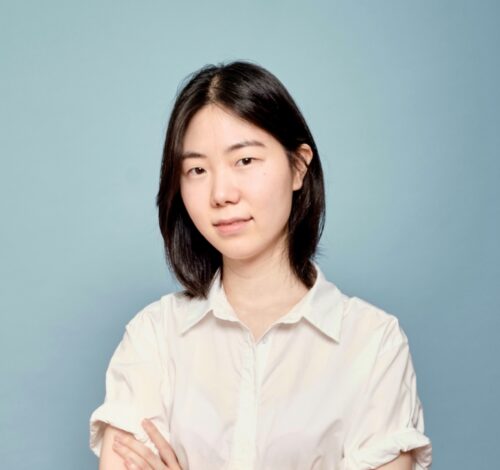
You-Jeong is a Ph.D. student in Architecture, holding both an M.S. and a B.S. in Architectural Engineering from Ewha Womans University. Her research focuses on assessing the energy performance of existing buildings through data-driven approaches. Currently, she is working on integrating inverse energy modeling with uncertainty analysis to develop a more efficient tool for post-occupancy energy evaluation.

Sun Kwon
Sun Kwon
Building Energy Simulation and Building Performance Evaluation, 3D building Information modeling(BIM, IFC), reconstruction and building data analysis
Advisor: Dr. Richard Karl Strand
Sun is a Ph.D. candidate in Architecture. She earned a B.S. in Architectural Engineering from Hanyang University and an M.S. in Civil and Environmental Engineering from Seoul National University, focusing on indoor building data updates based on AR and AI technology. She completed the Intensive Program in Artificial Intelligence at Carnegie Mellon University as a visiting researcher in the Department of Computer Science.
She has always been interested in researching the application of modern computer technologies, such as machine learning, to architecture. She is currently researching using artificial intelligence technology to scale up from building- to city-level energy simulations.
Read more here.


Siqi Lai
Siqi Lai
Machine Learning, Social Media Data, Green Space, Spatial Analysis
Advisor: Dr. Brian Deal
Siqi Lai is a Ph.D. student in Landscape Architecture. Her research focuses on applying machine learning in urban green space analysis. As a graduate, she studied Geospatial Analysis at Tongji University. Her primary research interests lie at the intersection of natural language
processing and urban park perceptions, particularly in understanding park visitor sentiments and enhancing their satisfaction.
Read more here.

Kyung-Kuhn Lee
Kyung-Kuhn Lee
East Asian landscape tradition, Theories of contemporary landscape architecture
Advisor: Dr. David L. Hays
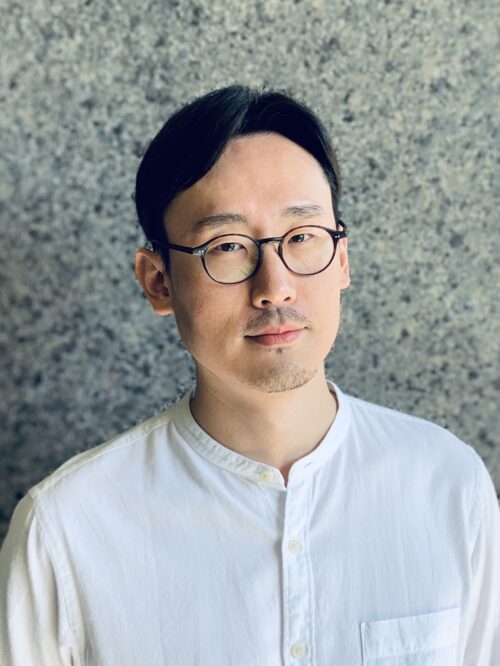
Kyung-Kuhn Lee is a Ph.D. candidate in Landscape Architecture at the University of Illinois at Urbana-Champaign. He finished his Master of Landscape Architecture at the University of Pennsylvania, focusing on the ecological legibility of designed landscapes. His research examines landscape as a discursive field of cultural identity, socio-ecological value, and disciplinary interests, particularly in the East Asian context. His dissertation presents a new history of the Korean Confucian Academies by foregrounding their marginalized landscapes, which have supported contradictory ideas of nature, landscape, and heritage during the process of rapid westernization. Kuhn has been a Fulbright Scholar since 2016 and won the Graduate College Dissertation Completion Fellowship in 2021.
Bhaswati Mukherjee
Bhaswati Mukherjee
Daylighting, Circadian Rhythm, Lighting Metrics
Dissertation: Effects of controlled lighting on the sleep, cognitive performance and mood of office workers: Application of simulation-based daylighting metric for circadian health.
Advisor: Dr. Mohamed Boubekri
Bhaswati Mukherjee is a Ph.D. Candidate in the Department of Architecture, whose research interest lies in investigating how the built environment can be designed to improve the health and wellbeing of its occupants. Her research focuses on investigating the impacts of daylighting on the circadian rhythm of office workers. She is also working on developing lighting metrics that take circadian health into account and provide design guidelines for healthy indoor lighting. She has a Master of Architecture from the University of Kansas with a Health and Wellness certificate, and a Bachelor of Architecture from School of Planning and Architecture, Delhi, India.
Junyoung Myung
Junyoung Myung
Transnational immigrant placemaking, historic preservation
Advisor: Dr. John Stallmeyer
Junyoung Myung is a Ph.D. candidate (History and Theory track), architect and urban researcher at the Illinois School of Architecture. His current research engages with history and theory of transnational architecture and urbanism; the relationship between cultural change and built environment; placemaking by immigrant communities; and public history and collective memory. More specifically, Junyoung’s studies aim to investigate how immigrants perceive public space in different localities and how transnational placemaking affects ethnic community formation and development in urban and suburban areas through the lens of transnational urbanism and socio-spatial theories and practices. Read more about Junyoung.


Bo Pang
Bo Pang
Urban resilience, spatial analysis, urban flooding and land use and land change
Advisor: Dr. Brian Deal
As a third-year doctoral student in Landscape Architecture, Pang works with Professor Brian Deal in the Land use Evolution and Impact Assessment Model lab. She focuses on exploring the role of landscape intervention in urban flood management under climate change. Bo received her Master of Landscape Architecture degree from the University of Illinois and a Bachelor of Arts in Cinematography & Production (Lighting Art direction) from the Communication University of China.

Aparajita Santra
Aparajita Santra
Gender and urban space, Intersectional feminisms, Transnational mobilities, Spatial agency
Advisor: Dr. John Stallmeyer
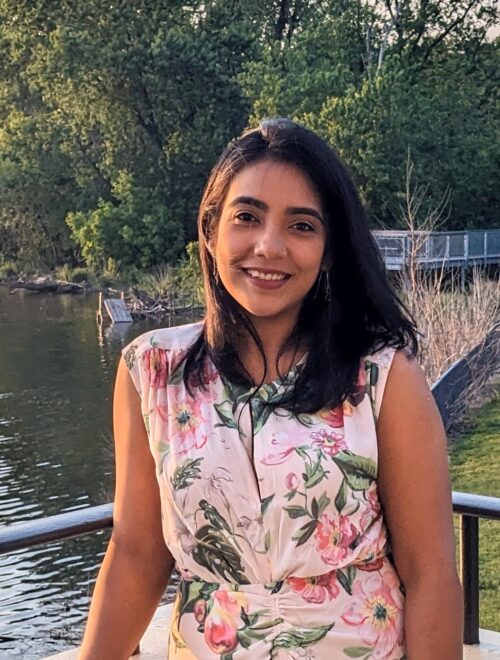
Aparajita is a PhD candidate in the History and Theory track in the department. She has dual graduate minors in Gender Relations in International Development and Gender and Women’s Studies. She did her undergraduate degree in Architecture and a master’s degree in Urban Design, both from India. Aparajita’s research interests are global-south urbanism, spatial justice, urban mobilities and feminist sociology. Her lived experiences and background shape her understanding of the unevenness in spatial design of cities as manifestations of structural inequalities, systemic oppression, and injustice. Her doctoral dissertation focused on studying the spatial negotiations of working-class women of lower-castes in Kolkata, India uses the lenses of intersectionality and spatial justice. Her research builds on urban sociology, feminist geography, sociology of gender and sexuality, postcolonial and transnational feminisms and explores the placemaking practices enacted by the minoritized women from the urban margins of Kolkata, India.
Aysenur Senel
Aysenur Senel
Islamic Architecture, Ottoman Architecture, Architectural Patronage of Women, Gender Politics, Women’s Agency, Center and Periphery
Advisor: Dr. D. F. Ruggles
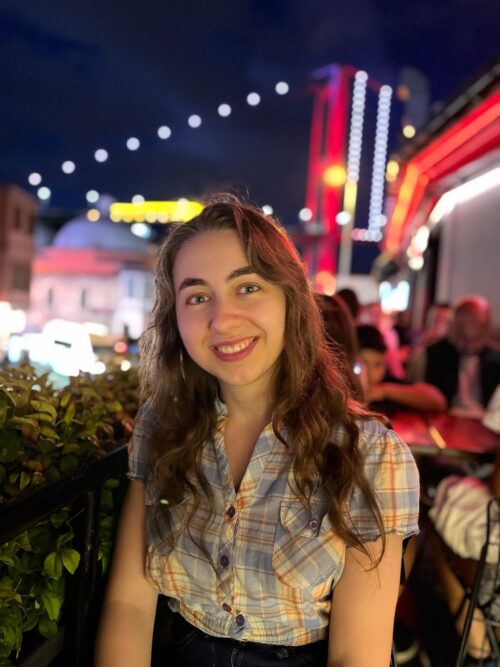
Aysenur Senel is a PhD student in Architecture with a concentration in History and Theory. She is also pursuing a graduate minor in The Women and Gender in Global Perspectives Program. She received her Master of Science in Architecture degree and Bachelor of Architecture degree with a Minor in Graphic Design from Bilkent University, Turkey. During her time there, she investigated the changing role of women and their relation to the production of mosque spaces. Currently, she continues her studies on Islamic Architecture and women’s agency in spatial production, with a focus on Ottoman history.
Angelina Tsoukala
Angelina Tsoukala
Cultural integration within residential environments
Advisor: Dr. Lynne Dearborn
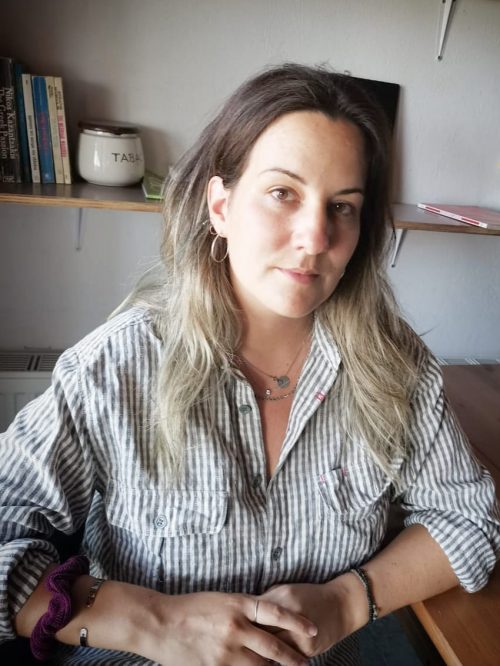
Angelina Tsoukala is originally from Thessaloniki, Greece. She graduated in 2012 from the University of Brighton with a Bachelor of Arts in Architecture and obtained her Master of Science degree in Architecture and Engineering from Politecnico di Milano while maintaining a high merits scholarship. There, she completed her thesis on the design of an efficient refugee camp in Lesvos, Greece. Since 2015 she has worked with several NGOs and the International Organization for Migration on projects for emergency sheltering of vulnerable populations within the refugee crisis. She joined University of Illinois at Urbana-Champaign in 2019.
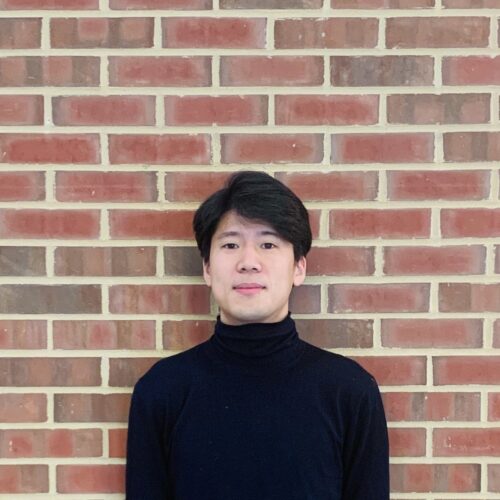
Taisuke Wakabayashi
Taisuke Loren Wakabayashi
Nuclear Infrastructures and Landscapes, Design-thinking, Techno-politics, Radioactive Waste Management and Disposal
Advisor: Dr. David Hays
Tai is a PhD student in the Department of Landscape Architecture, holding a master’s degree in Architecture and a bachelor’s degree in English. Currently a research assistant at the Unit for Criticism and Interpretive Theory, his research explores the profound role of design thinking in the emergence of nuclear infrastructures and landscapes, encompassing both built and unbuilt environments of the 20th and 21st centuries. These environments, born from military experiments or shaped by disasters, serve as propositions, offering insight into humanity’s negotiation with the enduring and hazardous nature of radioactive toxicity. Drawing from Poststructuralism and New Materialism, Tai scrutinizes the intricate, techno-political aspects of nuclear technology, emphasizing the production, management, and disposal of radioactive waste. He uses deep geological repositories to demonstrate how such designs delegate environmental responsibilities to geological space and time. Central to his research is the concept of “entrusting” to characterize humanity’s reliance on ecology’s self-healing capacities.

Jessica Wang
Jessica Wang
Sustainability, Smart Urban Systems
Advisor: Dr. Brian Deal
Wang’s research interests center around the realm of smart urban systems fostering sustainable, long-term city development. With a solid foundation in Urban Studies and the natural sciences, she comes equipped with a
perspective on designing and managing urban environments to minimize their ecological impact while simultaneously optimizing the urban system. Her educational background includes a Bachelor of Landscape Architecture (BLA) from the University of Illinois Urbana-Champaign and a Master in Landscape Architecture (MLA II) from the Harvard University Graduate School of Design.
During her master’s studies, she delved deeply into the development and application of green infrastructure as a potent tool for steering sustainable urban growth. Her journey has also taken me through invaluable experiences, serving as a research and teaching assistant at the GSD. These roles have afforded her the privilege of collaborating with experts across diverse disciplines, spanning regions such as Africa, Europe, America and Asia. She eagerly anticipate connecting with fellow researchers who share a fervor for crafting urban environments that are environmentally conscious and contribute to the well-being of inhabitants.

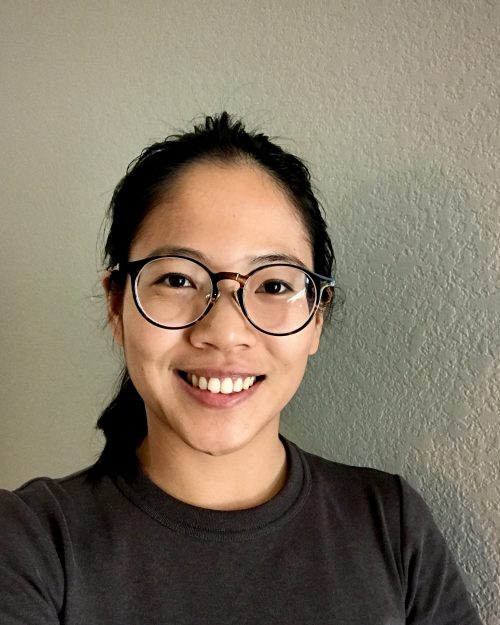
Chia-Ching Wu
Chia-Ching Wu
Impacts of plant diversity on landscape preference, recovery from short-term stress and mental fatigue
Advisor: Dr. Bill Sullivan
Chia-Ching Wu is a Ph.D. candidate researching natural landscapes and health in built environments. Specifically, she examines the impacts of ecologically healthy landscapes on human health and well-being. She holds a Bachelor of Science from the National Chung Hsing University and a Master of Science from the National Taiwan University in Taiwan. She worked as a research assistant at the National Taiwan University; during that time, she was involved in research projects exploring the health benefits of diverse green spaces in both urban and rural environments.

Yijun Zeng
Yijun Zeng
Human Perception of Urban Landscape: A Crowdsourcing Approach to Integrating Public Values into Geodesign Process
Advisor: Dr. Brian Deal
Yijun Zeng is a doctoral student in landscape architecture at the University of Illinois at Urbana- Champaign. Zeng has studied landscape architecture for over 8 years and she received her master of science degree from Southeast University and a bachelor of agriculture degree from Shanghai Jiao Tong University in China. Currently, she works with Prof. Brian Deal in the Land use Evolution and Impact Assessment Model (LEAM) lab. Her research interests focus on the interaction between humans and urban landscape, and how big data and advanced technologies help to gain the knowledge and integrate human perception into planning support systems.

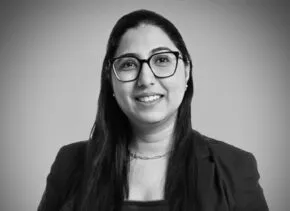
Delnaaz Kharadi
Delnaaz Kharadi
Architecture, Art History, Indian-Ocean Trade History
Dissertation: Architecture of Fire-Temple: Evolution of the typology and Shaping of Parsi Identity
Advisor: Dr. D. Fairchild Ruggles
Delnaaz is a Ph.D. student in Illinois School of Architecture (History and Theory track). She graduated with an M.A. in Art History from Pennsylvania State University and M.Arch from University of Illinois Urbana-Champaign. She brings a diverse set of experiences to her Ph.D. studies – four years as a project architect in India (2015–2019) with Architect Hafeez Contractor, along with professional experience at RATIO in the U.S. (2023–2024). These experiences deeply inform her research, which explores the vast topic of Zoroastrian Architecture that remains significantly understudied not only within the broader architectural discourse but notably in the specific context of South Asia’s architectural history. Delnaaz situates fire-temple (ritualistic spaces of Parsi-Zoroastrians) as an architectural typology that evolved in South Asia in the late 18th century. Using architecture as a medium, she argues that the fire temple was a physical manifestation of the ‘identity’ making project of Parsis in South Asia, where they were growing socio-economically due to their role in the Indian Ocean trade.
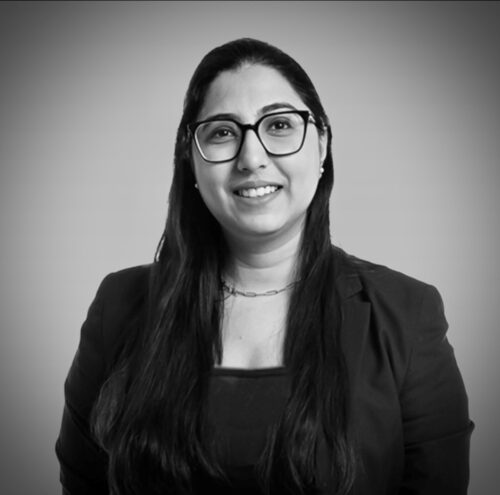
Saba Imani
Saba Imani
Human-Building Integration, Sustainability, Building Performance, Indoor Environmental Quality, Energy Efficiency, Occupant Health and Productivity, Environmental Resiliency, Post-Occupancy Evaluation, Advanced Sensing Technologies, Statistical Data Analysis
Advisor: Dr. Yun Kyu Yi
Saba Imani is a PhD student in the Department of Architecture at the University of Illinois at Urbana- Champaign (UIUC), holding both a bachelor’s and master’s degree in Architectural Engineering.
Prior to joining UIUC, she was an Associate Researcher at the University of Southern California (USC), where she led research on advanced building technologies and design, focusing on optimizing building performance, particularly in energy efficiency, indoor environmental quality (thermal, air, acoustic, and lighting conditions), and enhancing occupant health and productivity. Saba’s research explores human-building integration and the use of advanced sensing technologies to create built environments that promote human physiological and environmental health, wellness, sustainability, and resilience. She also integrates her expertise in statistical data analysis to model and interpret complex datasets, strengthening predictive capabilities and supporting decision- making related to environmental performance and occupant well-being. Outside of her academic work, Saba enjoys swimming, hiking, skiing, reading, and traveling.

Selorm Abla Afeke
Selorm Abla Afeke
Green Urbanism, Sustainability, Livable and User-friendly Urban Environments, Green infrastructure and Spatial Analysis
Advisor: Dr. Brian Deal
Selorm Abla Afeke is a doctoral student in Landscape Architecture at the University of Illinois Urbana–Champaign whose work bridges green urbanism, sustainability, and spatial analysis for climate-responsive city design. She holds both a BSc and Master of Architecture from Kwame Nkrumah University of Science and Technology (KNUST) in Ghana and later completed her Master of Landscape Architecture at the University of Illinois. Before returning to graduate study, she served as a Teaching Assistant in the Department of Architecture at KNUST and worked for three years as a Project Architect, experiences that grounded her design approach in practical, community-oriented problem-solving.
Her research is rooted in geospatial modeling, urban climate adaptation, and green infrastructure planning, with particular expertise in GIS-based suitability analysis, land-use/land-cover change modeling, and ecosystem-service assessment using the INVEST tool. During her master’s program, she worked as a Research Assistant with SEDAC, and she is currently part of the Land Use Evolution and Impact Assessment Model (LEAM) Lab under Professor Brian Deal, where she explores how spatial decision-support systems can guide resilient and equitable landscape interventions. Across her work, Selorm is motivated by the pursuit of resilient, livable, user-friendly urban environments and the integration of ecological thinking into landscape and urban design, especially in contexts ranging from Midwestern U.S. cities to coastal and rapidly urbanizing regions in Ghana.

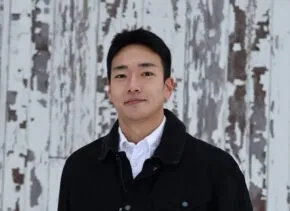
Myeongwon Chae
Myeongwon Chae
Building Energy Modeling, Building Data Analysis, Large Language Model, Deep Learning
Advisor: Dr. Yun Kyu Yi
Myeongwon holds a Master of Science in Architectural Studies from the University of Illinois Urbana–Champaign and a Bachelor of Architecture (five-year professional degree) from Ajou University. His research focuses on building energy analysis and data-driven approaches for evaluating the performance of existing buildings. Currently, he is working on domain-specific large language model (LLM) frameworks for building retrofit analysis, along with deep learning-based building energy prediction models.
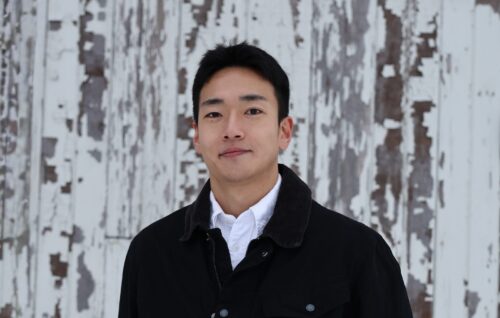
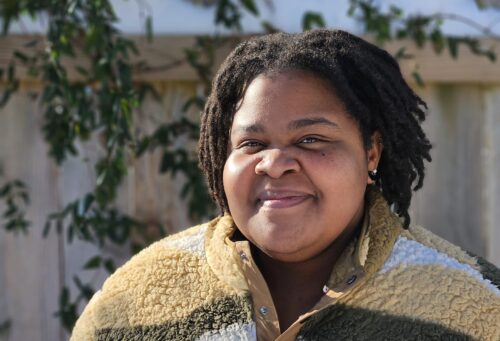
Anjelyque Easley-DeLuca
Anjelyque Easley-DeLuca
Traumatic Landscapes, Displacement, Brownfield, Urban Regeneration, Territorial Reorganization, Abandoned Military Bases, Industrial Sites
Advisor: Dr. Kathryn Holliday
Anjelyque is a PhD student in the Department of Architecture. She has a master’s degree in landscape architecture from the University of Texas at Arlington and a bachelor’s degree in landscape architecture with a minor in Jewish Studies, focusing on Holocaust and Genocide Studies from Pennsylvania State University.
Her research investigates intricate layered interactions and analyzes architectural and landscape transformations in sites affected by military activities and warfare. She aims to comprehend the roles of memory, trauma, identity, and erasure. Her work involves comparative case studies from diverse post-war environments. She examines ethical and critical methodologies within contexts of conflict and trauma, including the study of degraded landscapes and the processes through which nature and transient populations reclaim these areas. Core themes include memory, care, erasure, and displacement.
Previously, her research has focused on the often-neglected influence of Black Americans on the landscape, as well as on the similarities between post-World War II and post-enslavement landscapes across the United States and Europe.
Anjelyque has earned several recognitions, academic scholarships, and fellowships, including the National Organization of Minority Architects Student Member of the Year award in 2018, the Landscape Architecture Foundation award as the 2019 Undergraduate National Olmsted Scholar, and the 2021 CELA Dr. Charles Fountain Scholar Finalist award from the Council of Educators in Landscape Architecture.
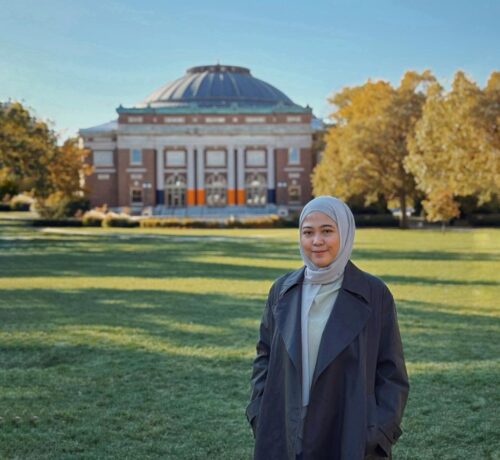
Harrini Hapsari
Harrini Hapsari
Landscape resilience, Carbon sequestration, Biodiversity conservation, Climate mitigation
Advisor: Dr. Brian Deal
Harrini is a doctoral student in the Department of Landscape Architecture at the University of Illinois Urbana–Champaign and a researcher at the LEAM Lab. She started her academic path with a BSc in Architecture from Sriwijaya University, Indonesia, which grounded her in design and built-environment thinking, and then expanded her perspectives through an MSc in Environmental Planning – Land and Water Development from IHE Delft, The Netherlands, where she developed a strong awareness of ecological processes and water-land relationships.
Her research journey began with a strong interest in urban disaster resilience, particularly in how landscapes and built environments respond to flooding and climate-related hazards. Through this lens, her research gradually evolved toward a deeper investigation of the processes that shape long-term landscape resilience, leading her to focus on carbon sequestration, greenhouse gas emission estimation, and biodiversity dynamics in grassland systems under the Natural and Working Lands (NWL) framework. Using landscape ecology, remote sensing, and spatial carbon modeling, she examines how land-use change, restoration, and management influence both climate mitigation and ecosystem health. Her work seeks to bridge climate resilience, carbon science, and biodiversity conservation to support more integrated, science-based strategies for sustainable and resilient landscapes
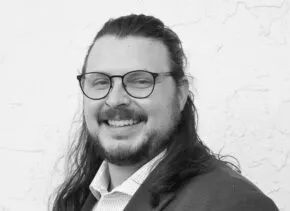
Derek Rahn Williams
Derek Rahn Williams
Carceral Environments, Code & Policy, History of Architecture, Historic Preservation
Advisor: Dr. Kathryn Holliday
Derek is a PhD student in the department of Architecture at the University of Illinois Urbana-Champaign in the history and theory track under the supervision of Dr. Kathryn Holliday. He holds a Master of Arts in Interdisciplinary Studies (architecture & sociology), a NAAB-accredited Master of Architecture, and a Master of Business Administration, all from Texas Tech University. Derek’s research examines nineteenth-century carceral environments questioning spatial affordances, tracing how health sciences, social sciences, and evolving law and policy have standardized jails, prisons, and immigration detention designs under the concept of McDonaldization. Subsequently, he is also interested in 19th century carceral environments and their preservation as 21st century spaces of cultural heritage and criminal justice education.
His work been disseminated through exhibitions such as “Carceral Complicity” in Texas, as well as conference presentations on the historic architecture of carcerality. He has extensive experience as a graduate instructor and teaching assistant in architectural design and history and is supported by the Alan K. & Leonarda F. Laing Memorial Fellowship in Architecture.