Introduction
Temple Hoyne Buell Hall is the “only building in the Midwest to bring together under one roof – in an academic setting – the three disciplines of architecture, landscape architecture, and urban and regional planning.” Illinois Located at 611 E. Lorado Taft Drive in Champaign, Illinois, the building serves as the primary home for the School of Architecture, the Department of Landscape Architecture, and the Department of Urban and Regional Planning. The 73,000 square foot building was designed so that most classroom, studio, and office spaces have natural light available during the day, Illinois creating an inspiring environment for design education.




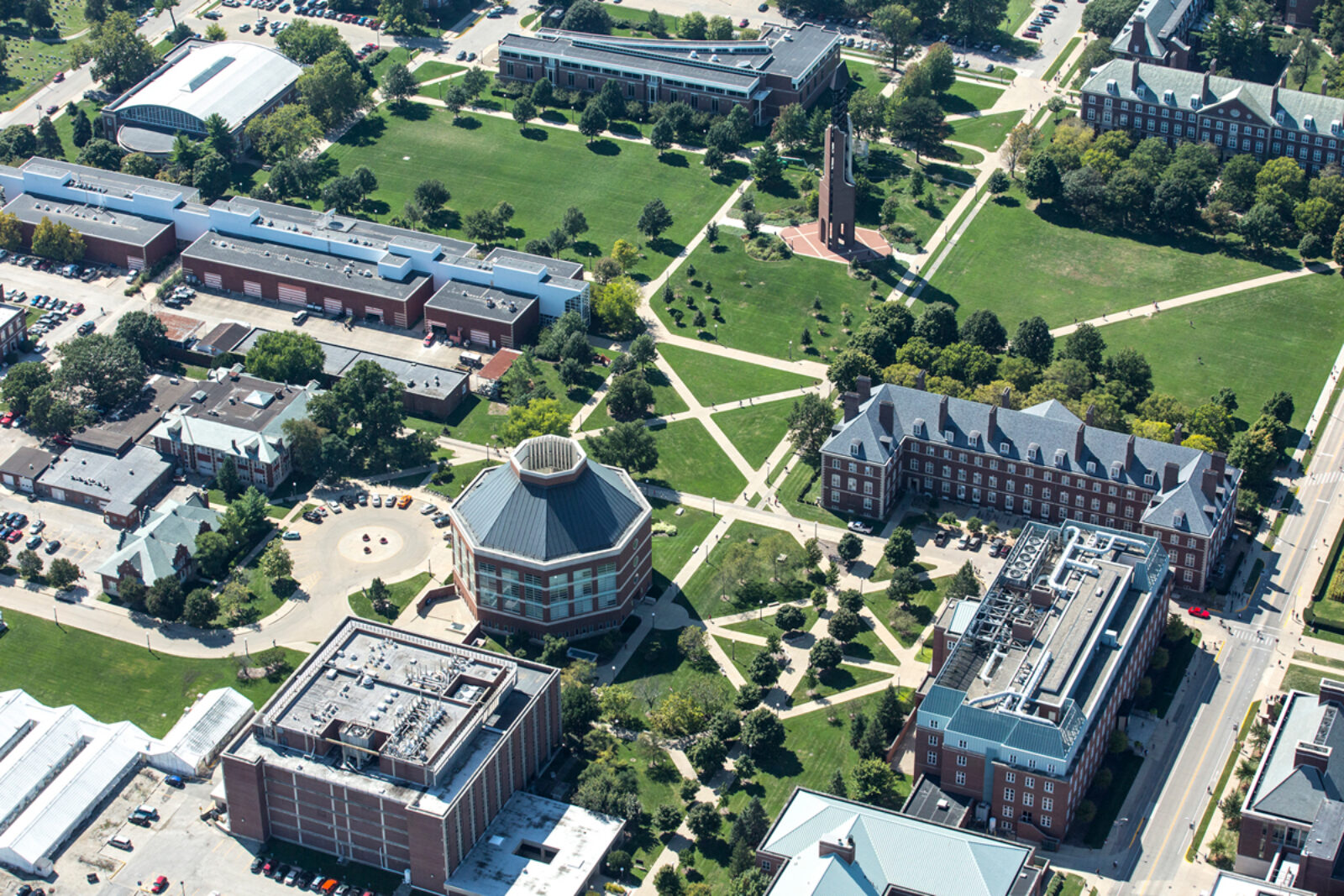
Temple Buell Exterior Gallery
History and Naming
By the early 1990’s, the Architecture Department had filled their 1926 building to capacity and the dire need for a new building was evident. Illinois The solution came through the generosity of a distinguished alumnus. Temple Hoyne Buell, a graduate of the class of 1916, had made his name with his design of the Cherry Creek Shopping Center, the first shopping mall with surrounding parking. Illinois In 1962 he had endowed the Temple Hoyne Buell Foundation, and in 1989 instructed it to fund a large gift to the University. It was this foundation that presented the University with an $8M gift to construct a new Architecture building in his name. Illinois Groundbreaking for the new building occurred on December 2, 1992, and the facility was dedicated on October 13, 1995. Illinois
About Temple Hoyne Buell (1895–1990)
Temple Hoyne Buell led a remarkable life that spanned architecture, development, and philanthropy. After graduating from Lake Forest Academy, he studied architecture at University of Illinois at Urbana-Champaign and completed graduate studies at Columbia University. Wikipedia His education was interrupted by world events: He served in France during World War I. In the battle of Château-Thierry, he was exposed to phosgene. In 1921, he moved to Denver, Colorado for treatment of tuberculosis. Wikipedia
After recovering his health, Buell built an extraordinary career in Colorado. By 1940, he headed the largest architectural firm in the Rocky Mountain region. Colorado Encyclopedia He designed more than 300 buildings in a wide variety of styles before his firm closed in 1989; his most notable designs and developments include the Paramount Theatre (1929), Norlin Library (1939), Denargo Market (1939), Cherry Creek Shopping Center (1955), and Cherry Hills Village. Colorado Encyclopedia His innovative approach to retail design earned him lasting recognition: Through this work, Buell became known as the “Father of the Shopping Mall.” Coloradobusinesshalloffame
Buell remained deeply connected to his alma mater throughout his life. He donated $6 million to the University of Illinois for Temple Hoyne Buell Hall at the School of Architecture, Colorado Encyclopedia ensuring that future generations of design students would have a world-class facility in which to learn their craft.
Architecture and Design
Temple Buell Hall was designed by Perkins & Will, Inc, with English Brothers Company handling the general contracting. Illinois The lead designer was Ralph Johnson (BSAS ’71), Illinois a University of Illinois alumnus who would go on to become one of the most celebrated architects of his generation. The architect—Ralph Johnson from Perkins and Will—designed a building that works for the users. He did not give making a statement a higher priority over fitting in with existing campus architecture. Taylor & Francis
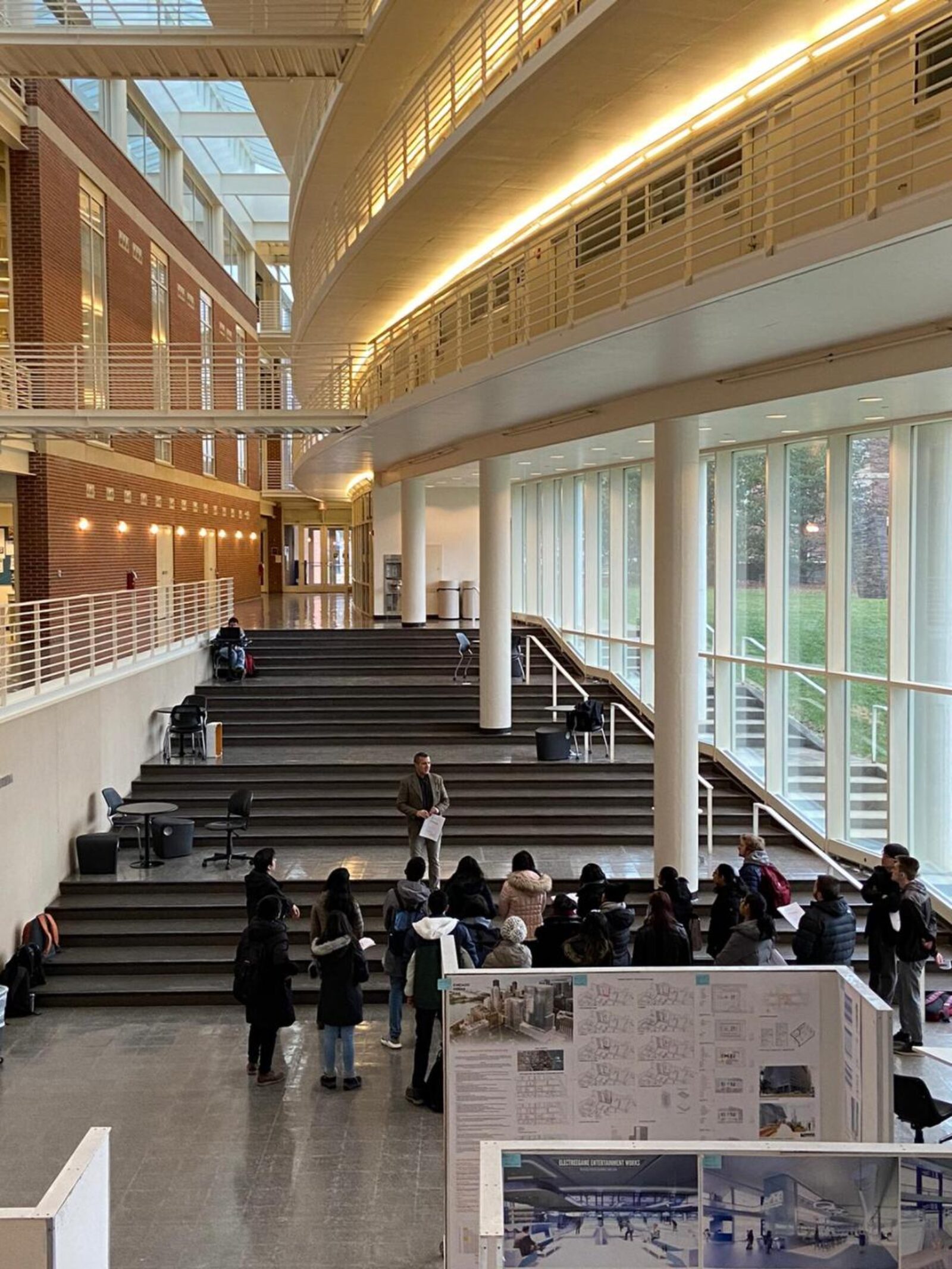
The building’s form reflects its interdisciplinary mission. The building consists of two rectilinear volumes of studio spaces juxtaposed against a curvilinear section that contains faculty offices. The building volumes form an interior gathering space that flows under the section of the building containing offices to an exterior sunken courtyard. Flickr This arrangement encourages spontaneous interaction among students and faculty from all three departments.
Material choices reinforce the building’s character. Brick dominates the building inside and out, giving a solid, stable appearance. The Atrium is a star space; and perched atop it, the Eagle’s Nest studio stands out as a visually impressive landmark. Taylor & Francis Another notable feature is the huge glass wall on the west side of the building which acts as the visual link to the exterior courtyard where the lawn and white stairs are. ExploreCU
One of the building’s greatest successes is its intuitive layout. Wayfinding is one of the building’s greatest strengths. Because the atrium is such a large, central, open space which can be seen from almost every spot in the building’s interior, it is almost impossible to get lost. Taylor & Francis Circulation and wayfinding work well because most circulation areas are open to the atrium. The design has hardly any enclosed corridors. The studios and jury/crit spaces have huge windows, some studios feature two-story spaces with large expanses of glass, and most review rooms have glass doors. Taylor & Francis


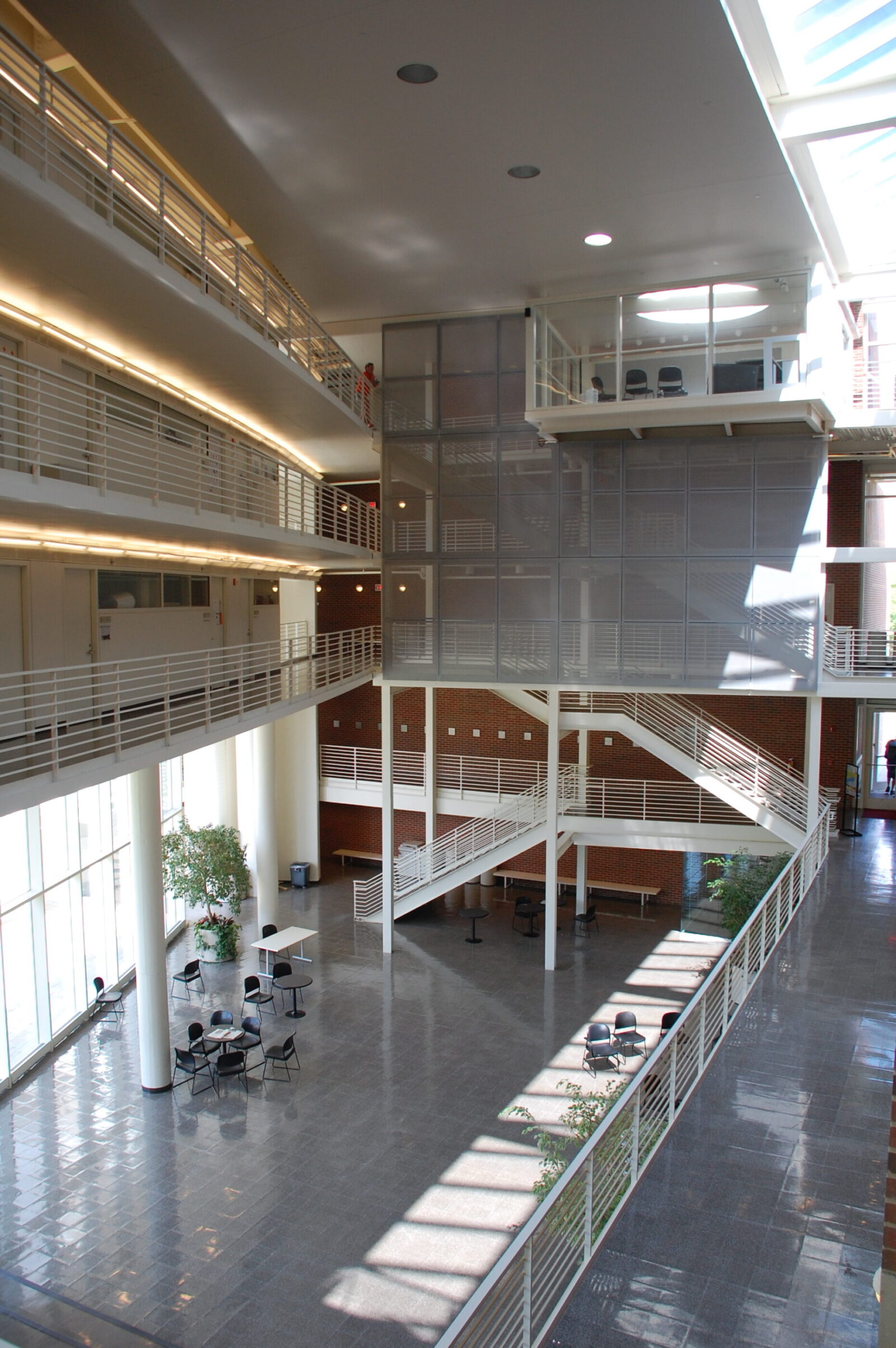
Temple Buell Hall
Awards and Recognition
Temple Buell Hall has been recognized by the architectural community for its design excellence. Temple Hoyne Buell Hall has received both the IAA award (Interior Architecture Award) and the DBA (Distinguished Building Award) for its successful interaction between forms and for a plan and section that are easy to understand. ExploreCU These honors were presented at the 1998 AIA Chicago Design Awards. This project received praise from the jury for the successful interaction between forms and for a plan and section that are easy to understand. Flickr
What Students Will Experience
Students, faculty, and staff consistently express high satisfaction with Temple Buell Hall as a learning environment. Post-occupancy evaluation of Temple Buell Hall included surveys of 424 students, faculty, and staff. Results show students, faculty, and staff as highly satisfied with the building. Taylor & Francis The exterior survey, completed by 141 individuals, revealed that respondents rated overall appearance of the exterior favorably, and also liked its impressive looks, excitement, and lighting features after dark. In particular they liked the west glass wall, the use of glass, and the curve. Taylor & Francis
The building offers a comprehensive range of facilities to support design education. Temple Hoyne Buell Hall, as a building designed for academic use, has several studios, an auditorium, offices and classrooms. ExploreCU Another typical feature in the building is an atrium in the center of the building where desks and chairs are placed for students and faculty to use. ExploreCU In Temple Buell Hall, two gallery spaces hold smaller installations, and studios and pin-up rooms act as ongoing galleries for design work. Illinois The open bridges and corridors throughout the building encourage interdisciplinary interaction and collaboration.
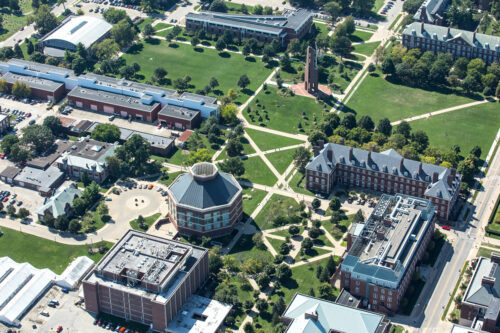
Temple Buell Hall is also situated in an ideal location on campus for design students. Krannert Art Museum is situated 780 feet west of Temple Hoyne Buell Hall, Mapcarta providing easy access to one of the Midwest’s finest university art collections. The McFarland Memorial Bell Tower is situated 370 feet northeast of Temple Hoyne Buell Hall, Mapcarta anchoring the building within the South Quad’s distinctive character.

About the Architect: Ralph Johnson
The designer of Temple Buell Hall, Ralph Johnson, exemplifies the caliber of professionals who have emerged from the Illinois School of Architecture. Ralph Johnson began his career at Stanley Tigerman’s office and in 1976 joined Perkins and Will, where he currently serves as its Global Design Director and is a member of its board of directors. Illinois His body of work has earned widespread acclaim: Projects he has designed have been honored with more than 150 awards, including 10 National Honor Awards and more than 80 Regional Honor Awards from the American Institute of Architects. Illinois
Johnson has maintained strong ties to his alma mater throughout his career. He received the Plym Traveling Fellowship from the University of Illinois School of Architecture. Illinois In 2022, he received the highest honor from his professional peers in Chicago: the Lifetime Achievement Award from AIA Chicago. Aiachicago Most recently, he established the Ralph E. Johnson Professorship in Design which supports the school in attracting and retaining the most brilliant scholars in the field of architectural education. Illinois